Wind,oh風よ
Back to Wind,ohWhat this is
A generative instrument based on global weather data.
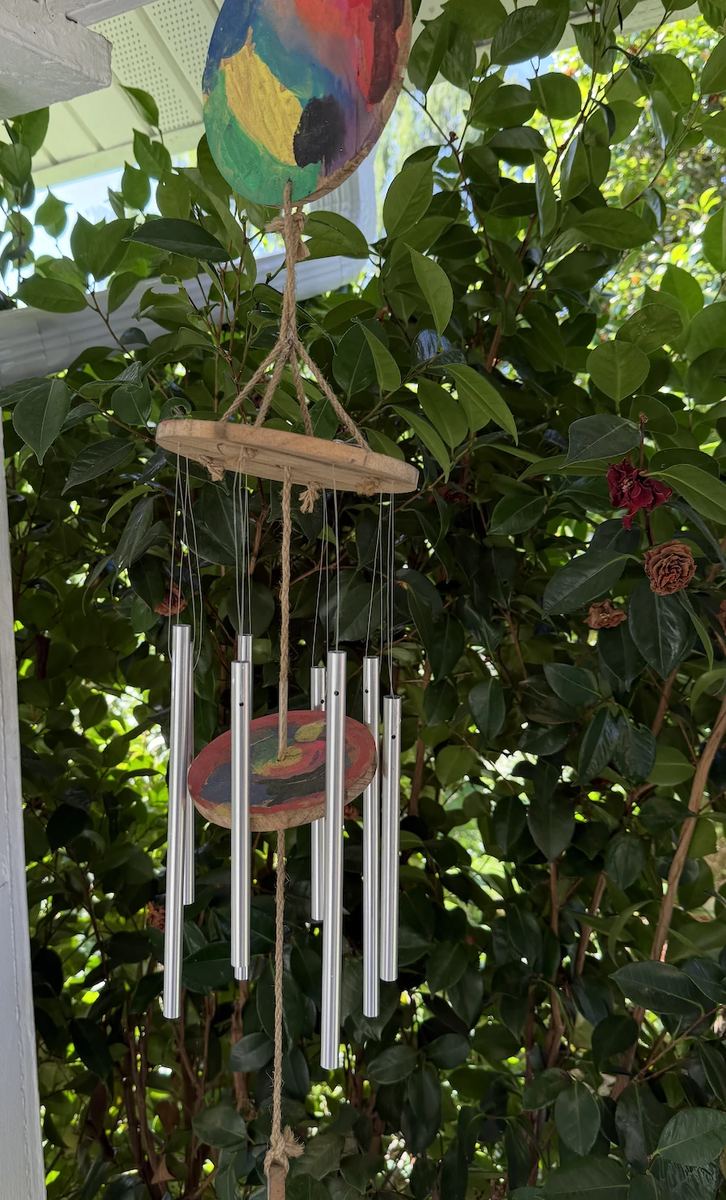
I had the idea to build this while staring at a wind chime my daughter made from a kit. I’d been curious about integrating open source data sets into something generative. Wind chimes, looked at in a certain way, are essentially generative instruments, and I thought it would be fun to use AI to explore what was possible using a similar concept at a different scale.


I’m interested in how AI allows for a new type creative play. Ideas used to be severely constrained by effort, knowledge, and time. Only certain ideas were worth significant investment of those things. Only certain people had the surplus of those things beyond what their daily life required to see their ideas come to fruition. That isn’t inherently bad, but those constraints are now largely gone.
I was really captivated when I learned about St. GIGA, a Tokyo-based broadcaster that used things like the timing of the tides to set its broadcast schedule. Around this time I found an old shortwave radio at an estate sale and fell in love with trying to capture little fleeting signals from vast distances away.
St.GIGA セント・ギガ
“In accordance with Yokoi’s conception, St.GIGA’s broadcasts initially followed no externally fixed (or artificial) timetable. Rather, they were based upon the cyclical motif of a 24-hour “tide table” where broadcast themes were approximately matched to the current tidal cycle according to the rule of twelfths throughout the 24-hour broadcasting period. Under this innovative schedule, the station broadcast a variety of primarily ambient music programs including Music Tide (音楽潮流, Ongaku Chōryū), various jazz programs, and Tide Table (タイド・テーブル, Taido . Teburu) (featuring live sound-broadcasts of the ocean shore).”
“The beginnings and ends of programs were not clearly demarcated and instead utilized the unprecedented “Tide of Sound” (音の潮流, Oto no Chōryū) method where songs of one genre would gradually flow into and intersperse with the songs from the prior genre until the new genre became predominant.”
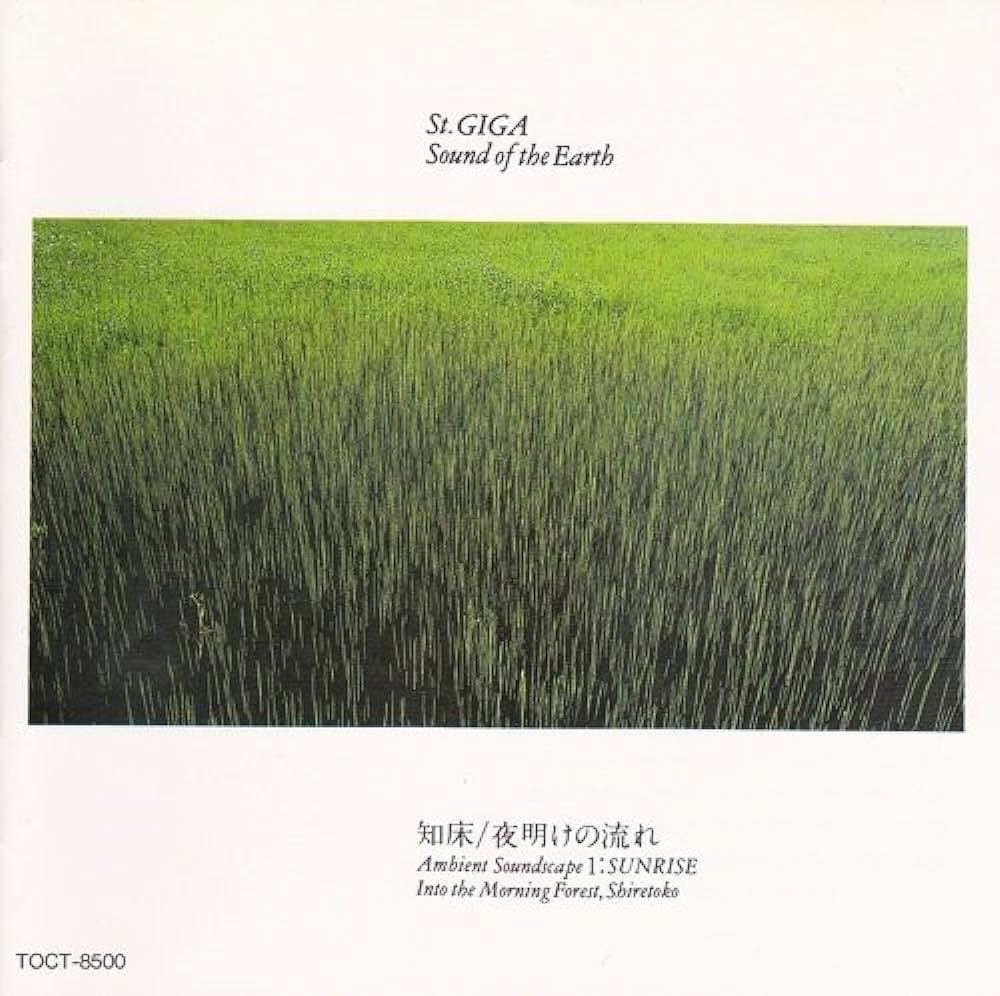
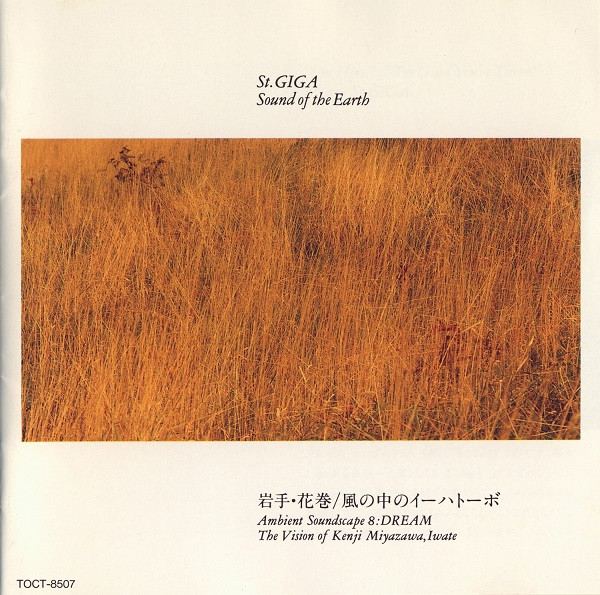
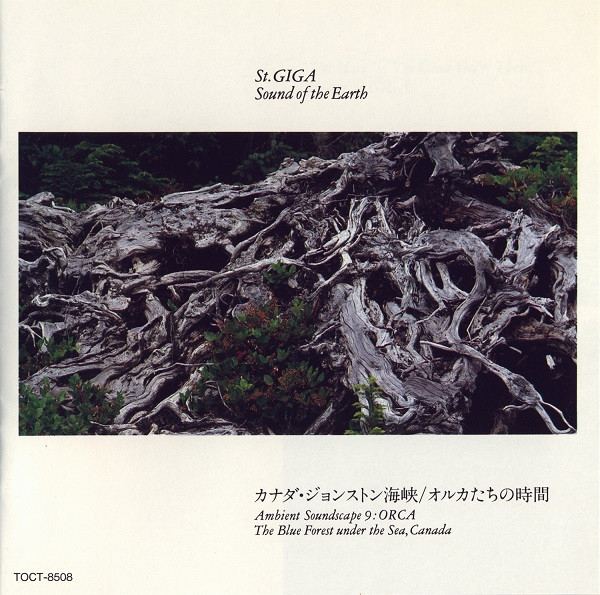
There is a really rich tradition of creating a dialog between nature and music, from the Aeolian harp to R. Murray Schafer and new age tapes. My hope with this project was to, in my own small way, explore the new possibilities that this great tradition opens up.
The instrument how the wind plays
Each city is a windchime. It’s probably easiest to picture it like a little xylophone. As the wind rises and falls, a “mallet” strikes the bells of the chime.
Each chime has eight bells, set across the range its wind is moving through and tuned up the scale. The mallet rides the city’s Live line, swinging further in stronger and gustier air, and a note sounds wherever it crosses a bell. The faster it crosses, the harder the note. Calm air barely rings; a gust sweeps a chord. The original pattern sequencer is still there: Mode → Pattern.
Pitch
The sky picks the mode, leaned bright on purpose: clear is major pentatonic (Lydian while the glass rises), broken cloud is major, overcast is Mixolydian, rain is Dorian, snow is major pentatonic, fog is open fifths and thunder is whole-tone. A split vote goes to the brighter mode. Air pressure picks the key: each 4 hPa above or below normal is one step around the circle of fifths from A, and the tonic walks there one fifth at a time. Every note is a scale degree folded into its city’s register, set by temperature.
Voices
A tubular chime, with the free–free bar partials 1 : 2.76 : 5.40 : 8.93. An Aeolian harp, which sings the harmonic nearest its vortex frequency. A Karplus–Strong pluck. Two FM bells, a struck-string piano, and the original analog-style voices.
A sub-bass drone follows the jet stream at 250 hPa (Jet). A St.GIGA-style noise wash sits under everything (Wash). Tape runs the whole mix through a worn cassette: wow and flutter wander the pitch, the highs roll off, the lows thin, peaks round off, hiss rises underneath, and now and then the level drops out for a moment. Its four knobs shape it: wow (the slow pitch wander), flutter (a fast waver and a shimmer in the level), age (duller highs, hiss and hum, crackle, dropouts, a narrower image and a faint print-through echo) and drive (saturation, soft pumping compression and a fuller low end).
The day
The listener’s day runs in twelfths: six from sunrise to sunset and six from sunset to sunrise. Each twelfth is a program for chime density, wash depth, jet level and reverb, crossfading into the next, and is shown as 時 in the readout. Sharing your location (Add here or Around you) uses your real sunrise and sunset.
The readings six ways to read the wind
The same wind, read with the instruments meteorologists use. Each picture is the real wind at eight cities on the evening of 21 October 2026.
Live
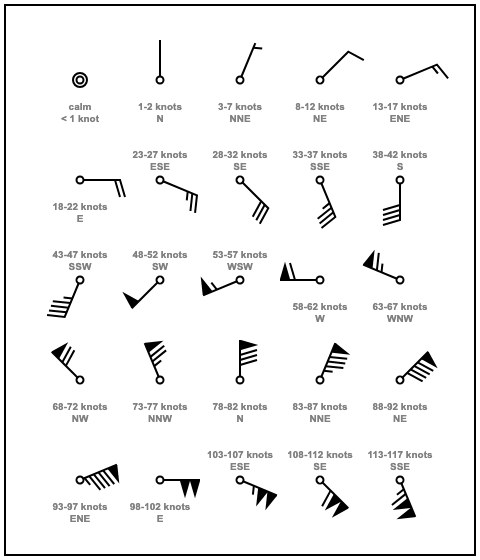
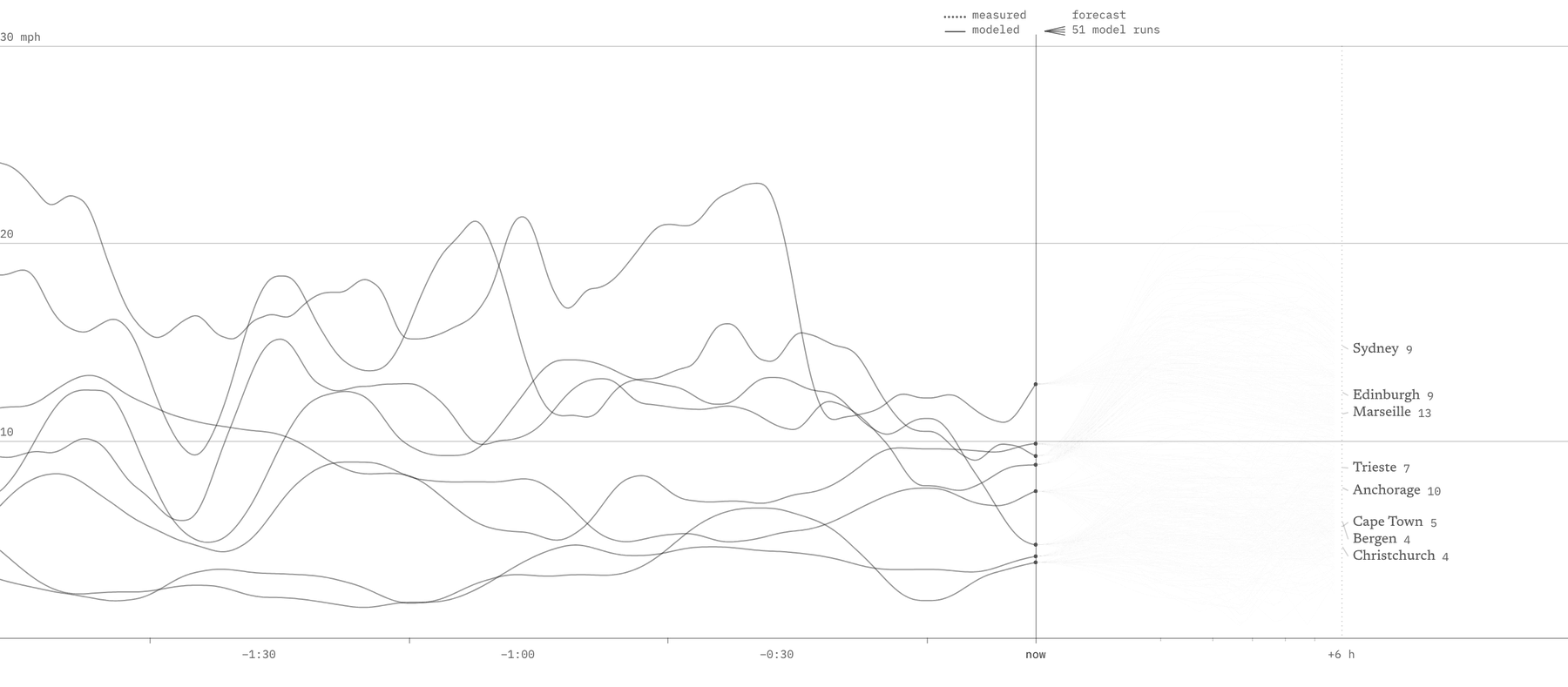
The last two minutes. Dotted is the measured 15-minute wind; solid is the modeled flutter around it. Ahead of now are all 51 runs of the ECMWF ensemble for the next six hours. Each chime’s bells sit at the head of its line, a barb points into the wind, and each note leaves a dot.
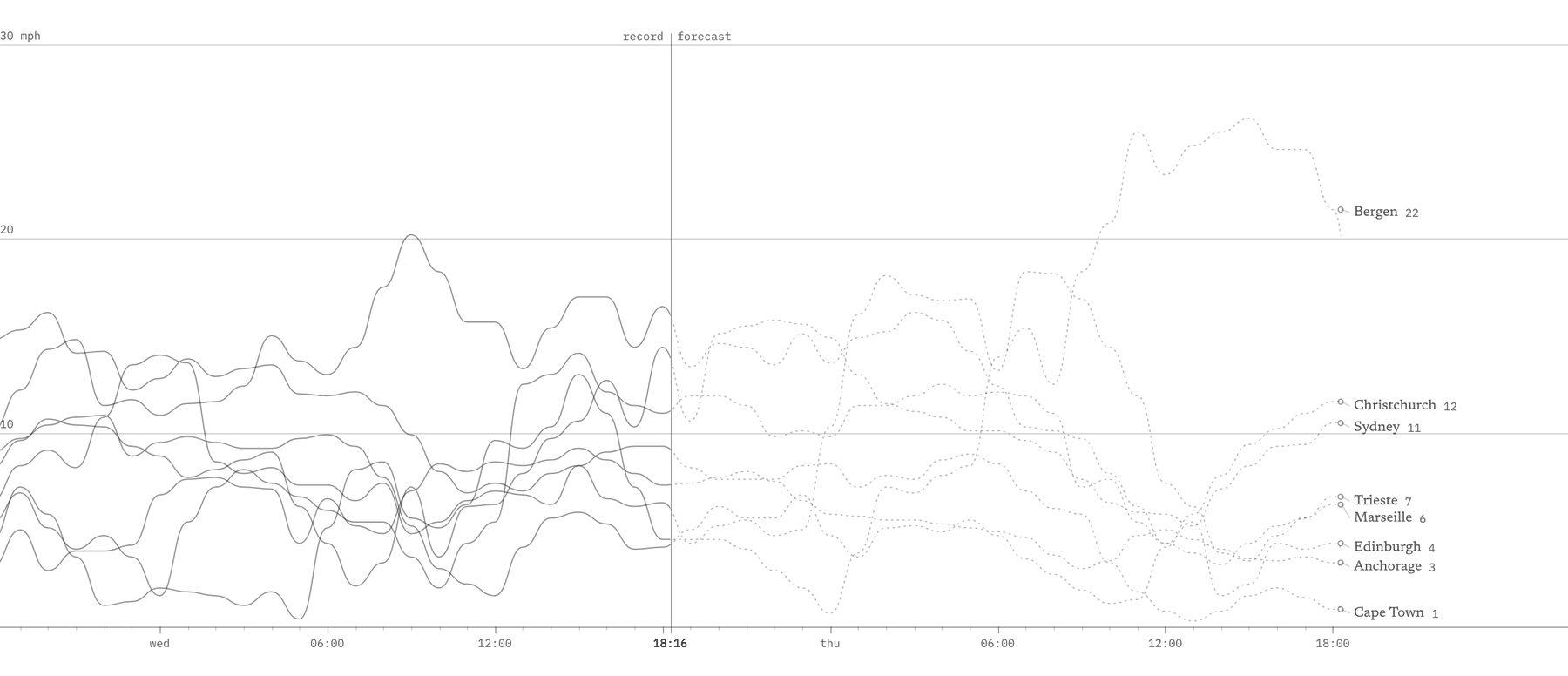
48 hours
Yesterday to tomorrow, hourly. Shaded: gusts, and the forecast’s likely range (the ensemble’s 10–90%). Gray: night, for the city in focus.
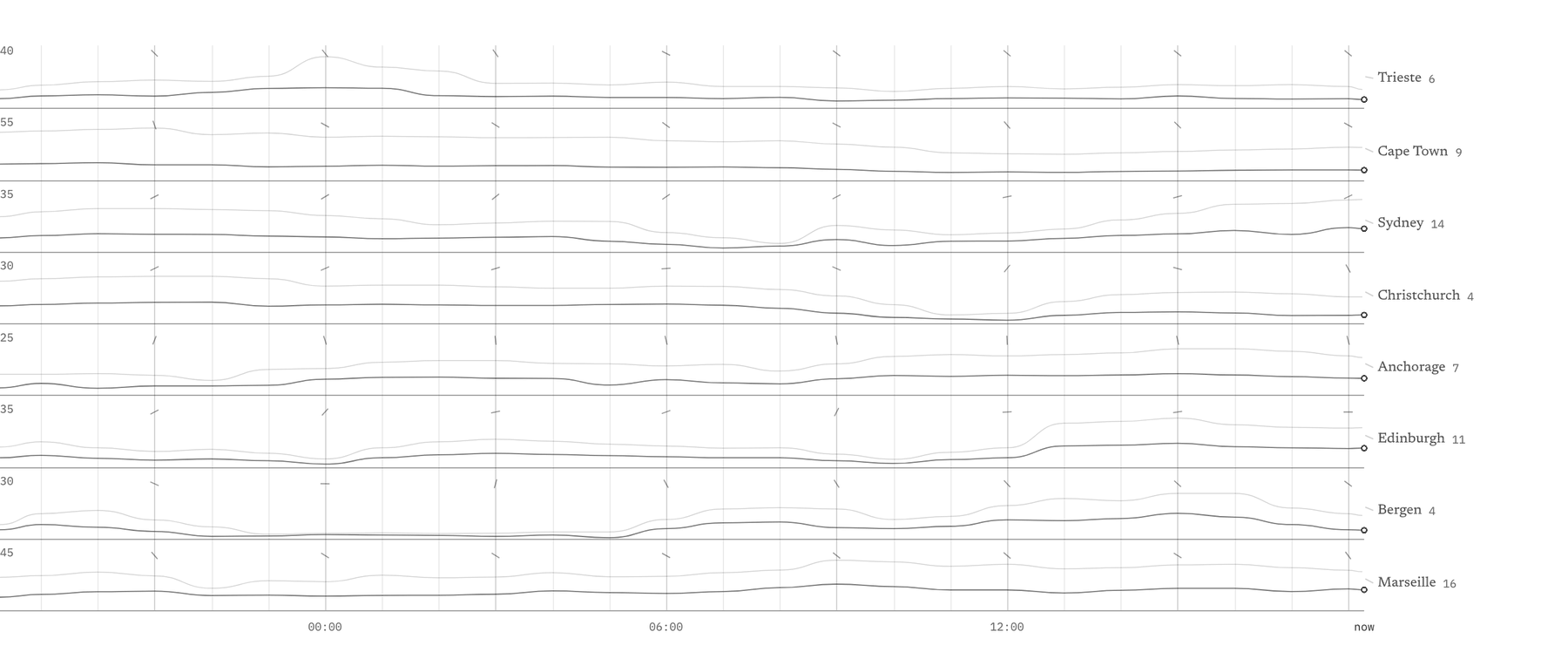
Anemogram
The last day, one band per city, like a recording anemograph’s drum. Ink: mean wind. Faint: gusts. Ticks: direction every three hours.
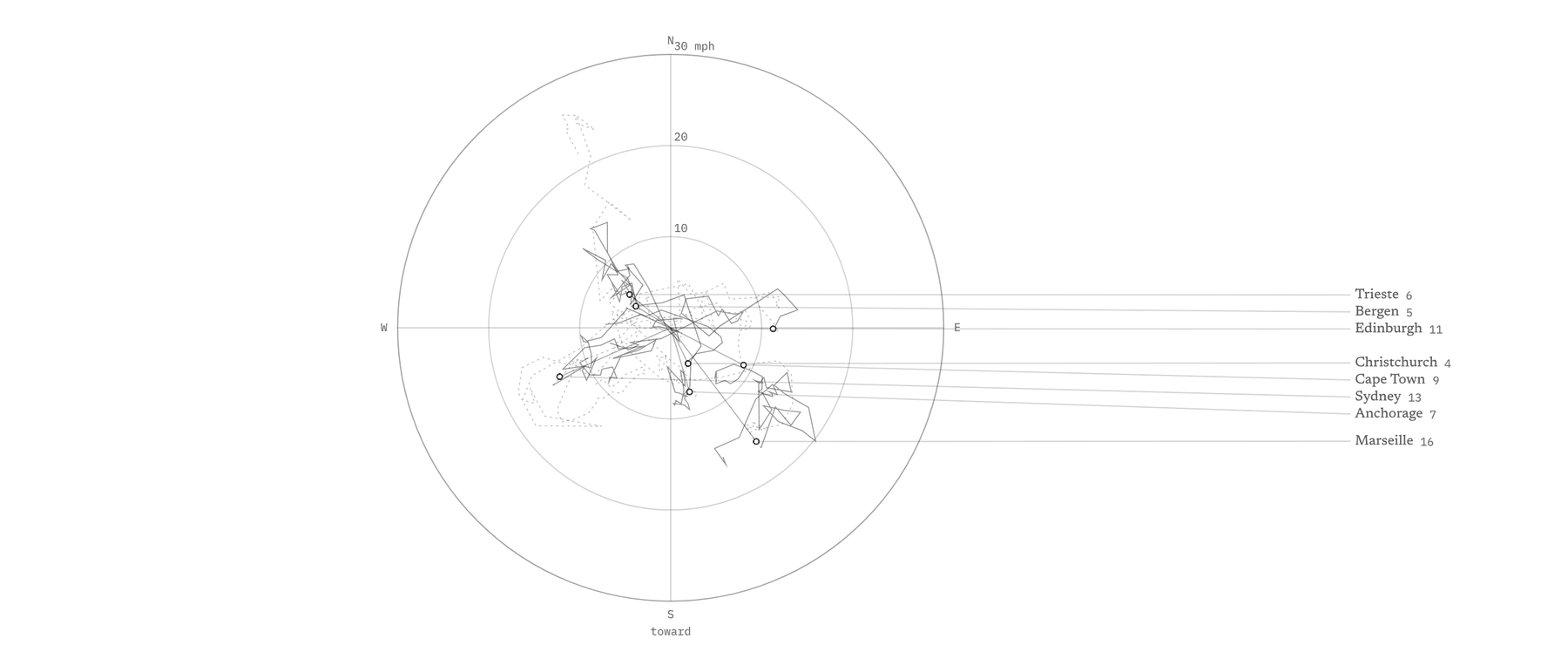
Hodograph
Where the wind vector points, hour by hour for 48 hours. Out from the center is speed; around is direction. Clockwise curl is veering wind.
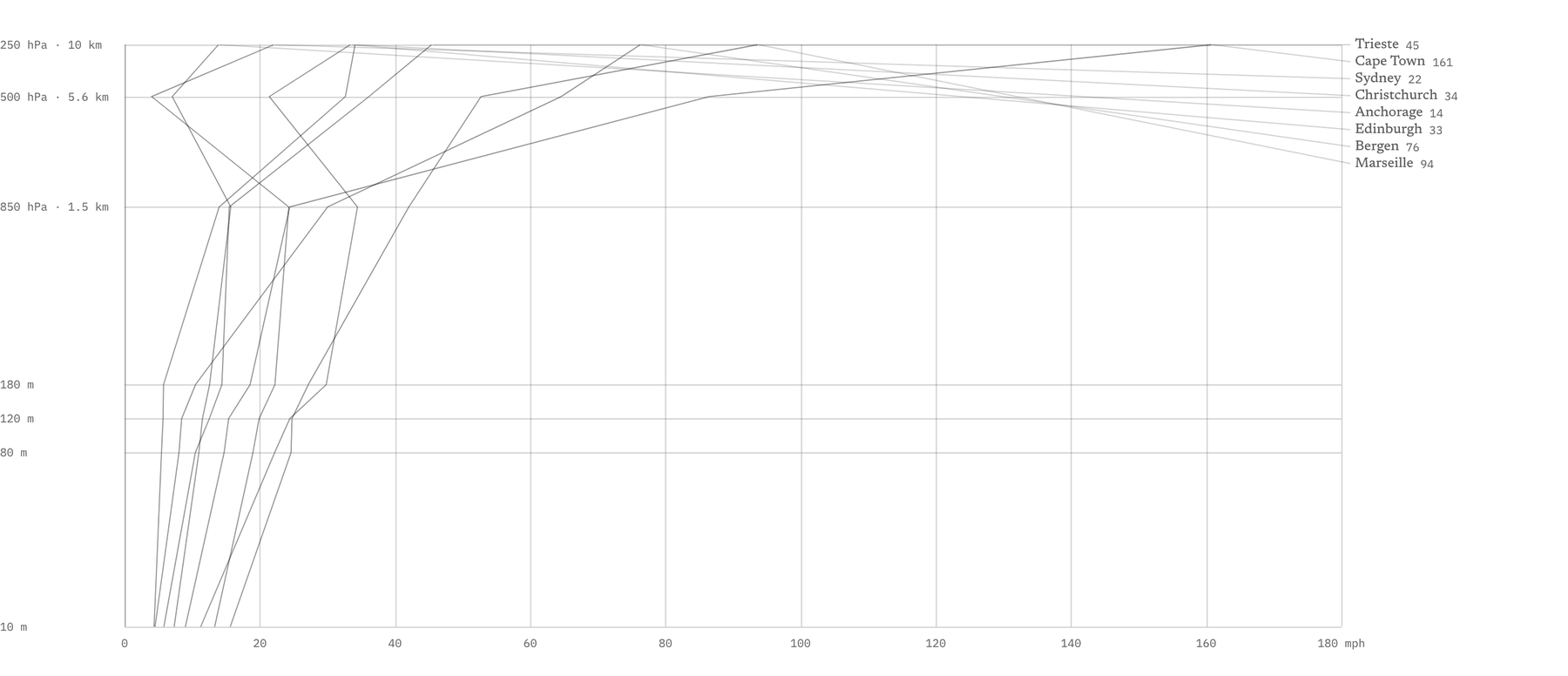
Sounding
The wind now, from the ground to the jet stream, one line per city. Faint: the same profile a day ago.
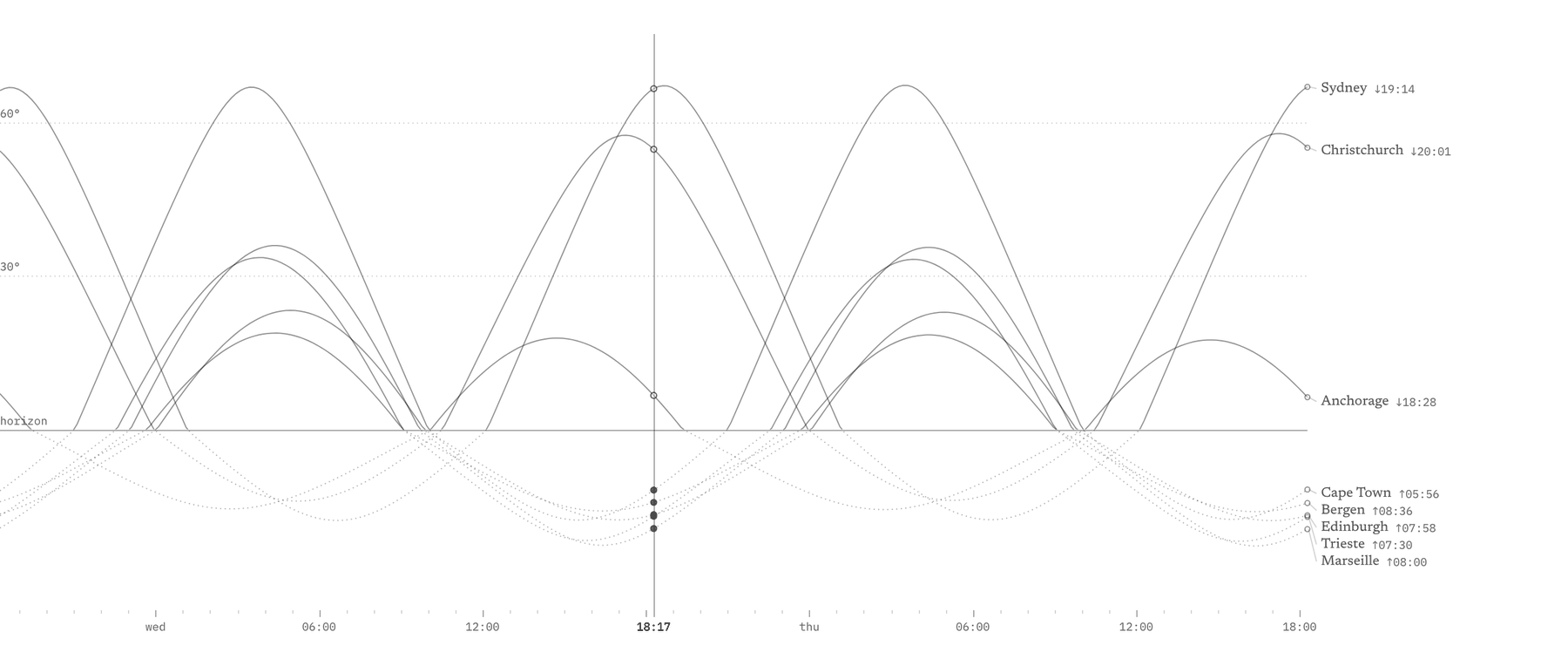
Sun
The sun in each city, yesterday to tomorrow. An arc over the horizon is a day; the dotted dip below it is night. The circle is the sun now; beside each name, its next sunrise or sunset, local time.
Bands gives each city its own strip. Key shows a legend of every mark. Focus mode, in the bar at the foot of the page, puts everything but the lines away, and the menu at the top left holds the readout and the piece’s settings. PNG saves any reading typeset, and SVG saves the 48-hour lines as vectors, for print.
The piece places, days and keepsakes
- Add a place searches any town.
- Windiest plays the eight strongest winds in the pool.
- Around you puts each city at its true compass bearing around you. Use headphones.
- Named local winds show when they blow: Mistral, Bora, Chinook, Föhn, Santa Ana, Levante, Cape Doctor, the Gorge wind.
- Replay plays any date back to 1940 in four minutes.
- Record saves the sound; with Stems it also saves one file per city.
- MIDI sends notes on one channel per city, with the wind as CC 1 and the gust as CC 2.
- Copy link copies a link that restores everything. Shared, it unfurls with a picture of the day’s wind.
Tiding 潮よ
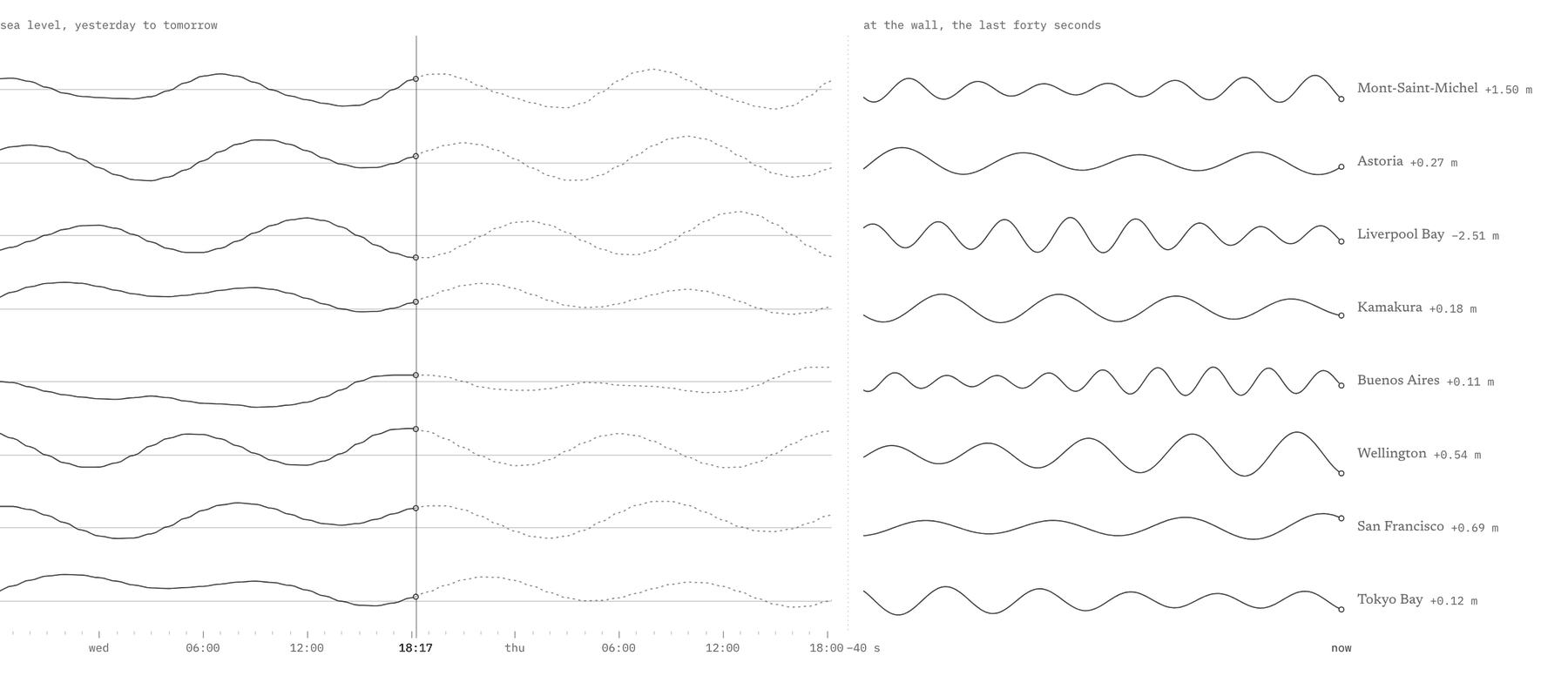
Tiding is Wind,oh’s sibling, and does the same with the sea. Eight harbors’ sea levels come from the Open-Meteo marine model, which includes the tides. Each is drawn from yesterday to tomorrow with high and low water marked. Beside it is a close-up of the harbor wall: the last forty seconds of waves, at their real height and period, on that tide.
Each harbor is a chime whose bells sit around the water line, and the waves strike them. A flooding tide lifts the melody; an ebbing one lowers it. The moon picks the scale: in-sen at new moon, Lydian at full. The twelve programs follow the rule of twelfths, from low water to high and back, as St.GIGA did.
Data
Everything comes from Open-Meteo. The forecast is one request for every place: current conditions, hourly wind at 10, 80, 120 and 180 m and at 850, 500 and 250 hPa, 15-minute wind, and sunrise and sunset. It refreshes every 10 minutes and is kept in the browser, so a reload is instant and a failed fetch falls back to the last good data, marked Old. The ensemble is 51 runs of the ECMWF model, refreshed hourly. Replay, the place search and Tiding use Open-Meteo’s historical, geocoding and marine services. A place with no data falls back to simulated weather, marked Sim.
How it was made every version
This project has been a long running convo with different AI models, version after version, for more than a year. Returning to it as new models arrive has become a way to see what each one does with the same brief: what they’re good at, bad at, and so on. It will keep evolving over time.
I drew inspiration from the Environments series, Windham Hill, St.GIGA, and messing around with a short-wave radio I got at a garage sale.
-
4.0潮よ
A second piece: Tiding
Eight harbors’ sea levels from a marine model, the waves on them, and a chime at each harbor wall that the waves strike. The flood lifts the melody; the ebb lowers it. The moon phase sets the scale.
This is St.GIGA’s idea taken literally: the program follows the tide by the rule of twelfths, low water to high and back. Both pieces now share one engine, one type system, one way of drawing.
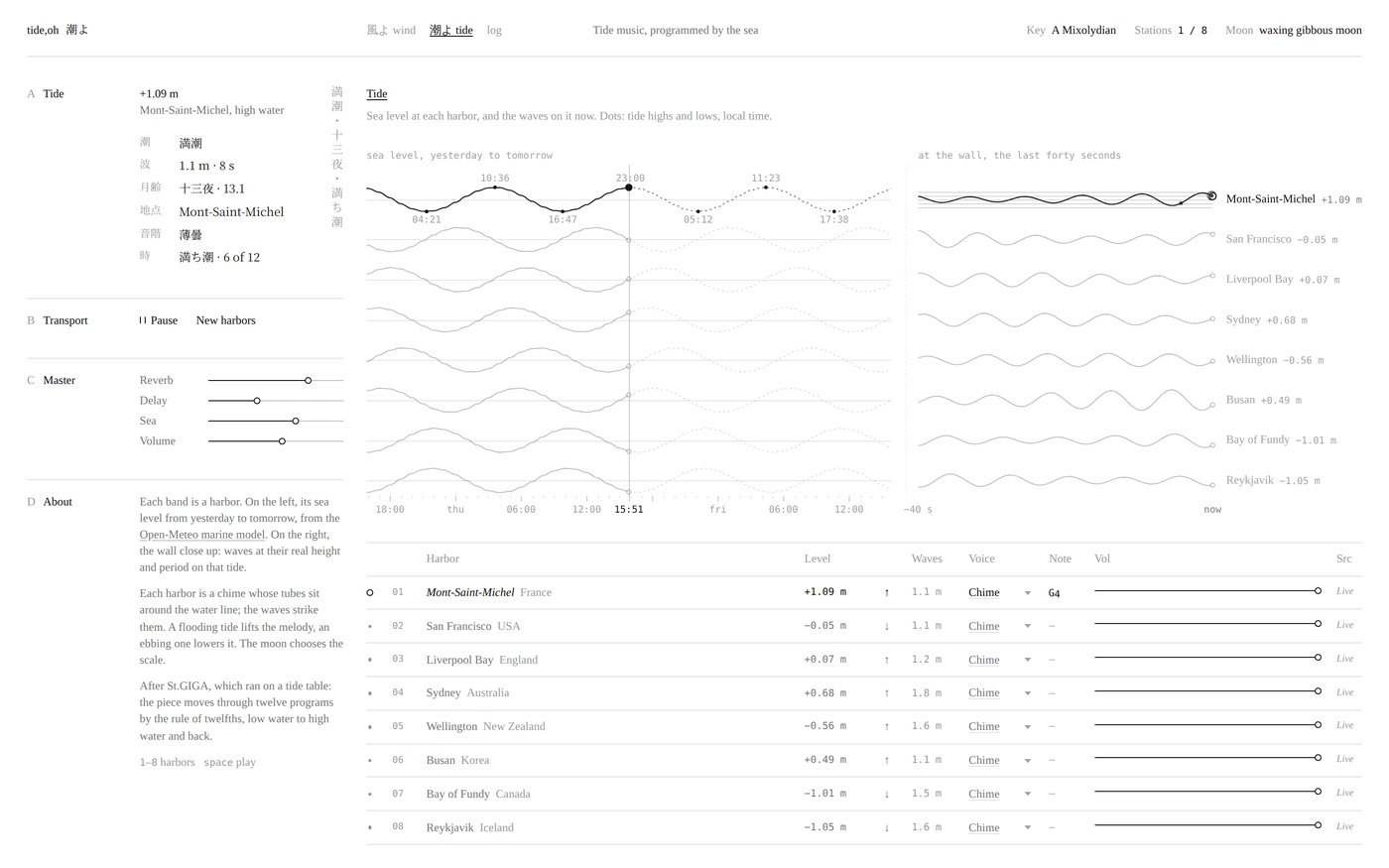
Sea level, yesterday to tomorrow; the wall close up. -
3.1Readings
Readings, and a way to just listen
The same wind, read with the instruments meteorologists use: an anemogram (a drum of ruled paper, one ink line per city), a hodograph (the tip of the wind’s arrow curling through two days), a sounding (the wind from the ground to the jet stream).
Listen mode takes everything else away. Any reading can be saved as an image; the 48 hours as vector lines, for prints.
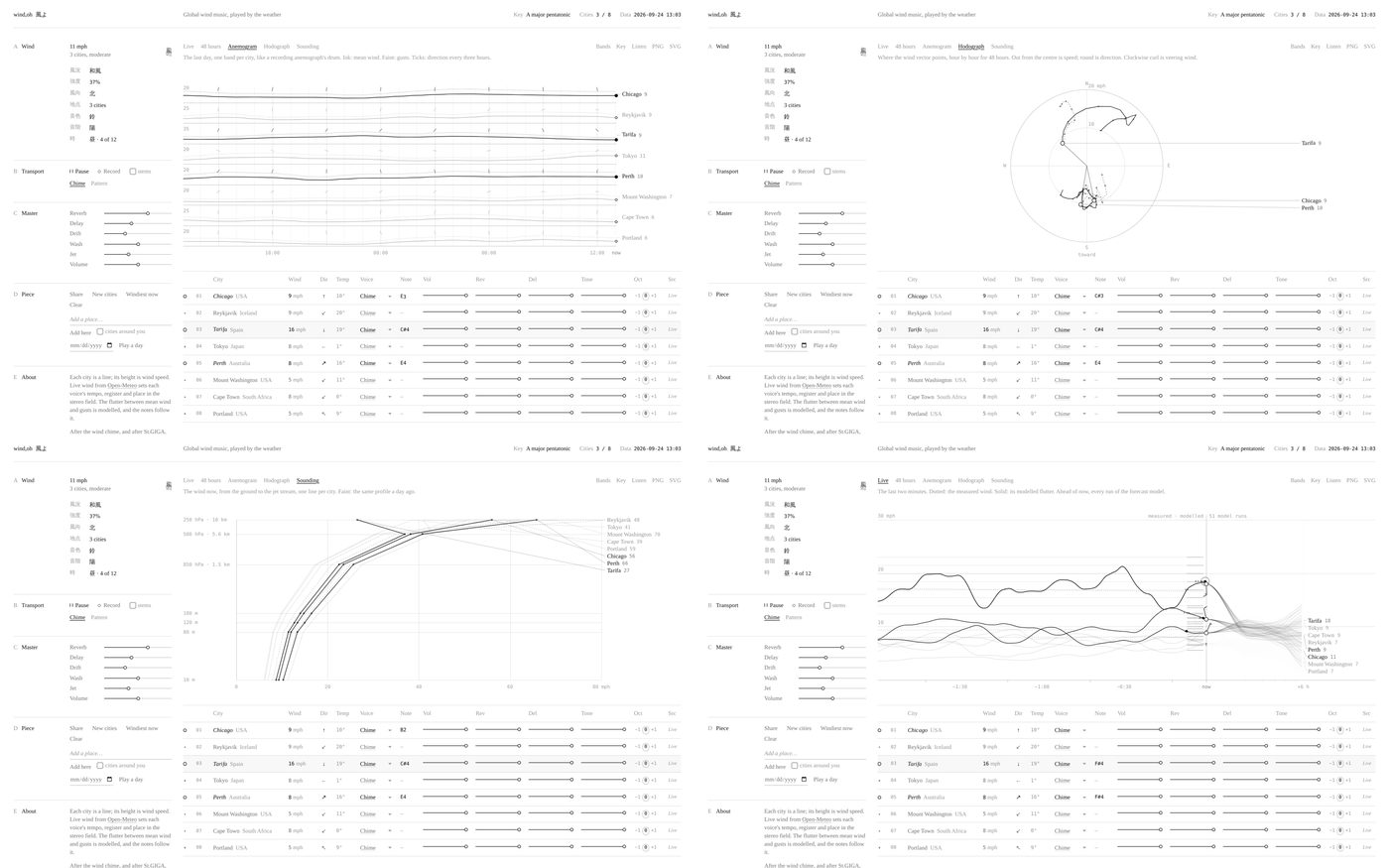
Anemogram, hodograph, sounding, live. -
3.0The chime
A chime again
The notes used to come from a pattern table the weather chose. Now each city is a chime: eight bells set across the range its wind is moving through, a mallet riding the wind line, a note wherever it crosses a bell. Calm air barely rings. A gust sweeps a chord.
The forecast fan became real: 51 runs of the ECMWF ensemble. The line became honest: dotted where it’s measured, solid where it’s modeled. The sky picks the scale, pressure picks the key, and the day is kept in twelfths.
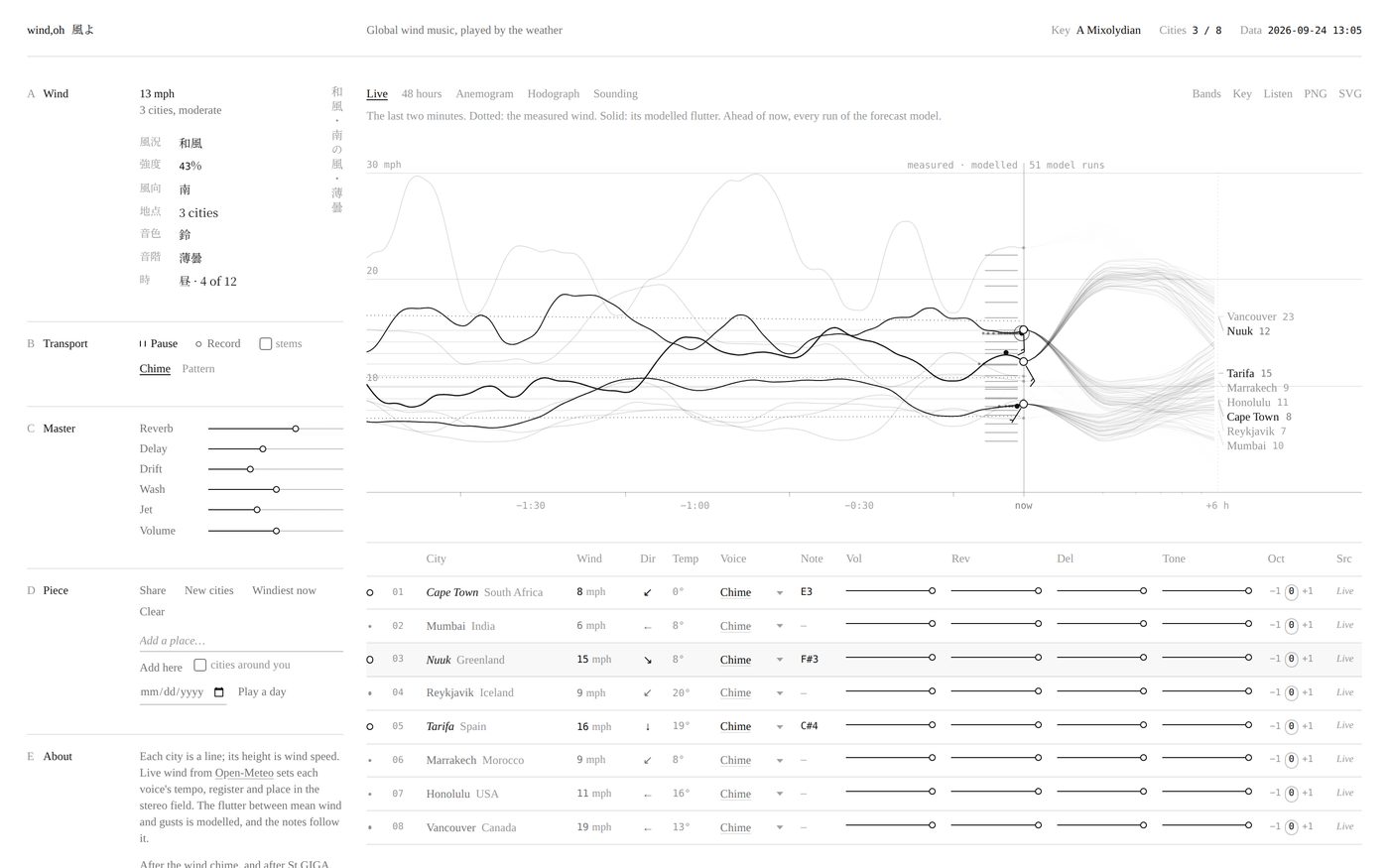
Bells at the head of each line; the ensemble ahead of now. -
2.1Type
Smaller, airier, and moving
The type dropped to one small size with more room around everything. Installed kugiri for text effects, so a city’s name leans the way its wind is blowing.
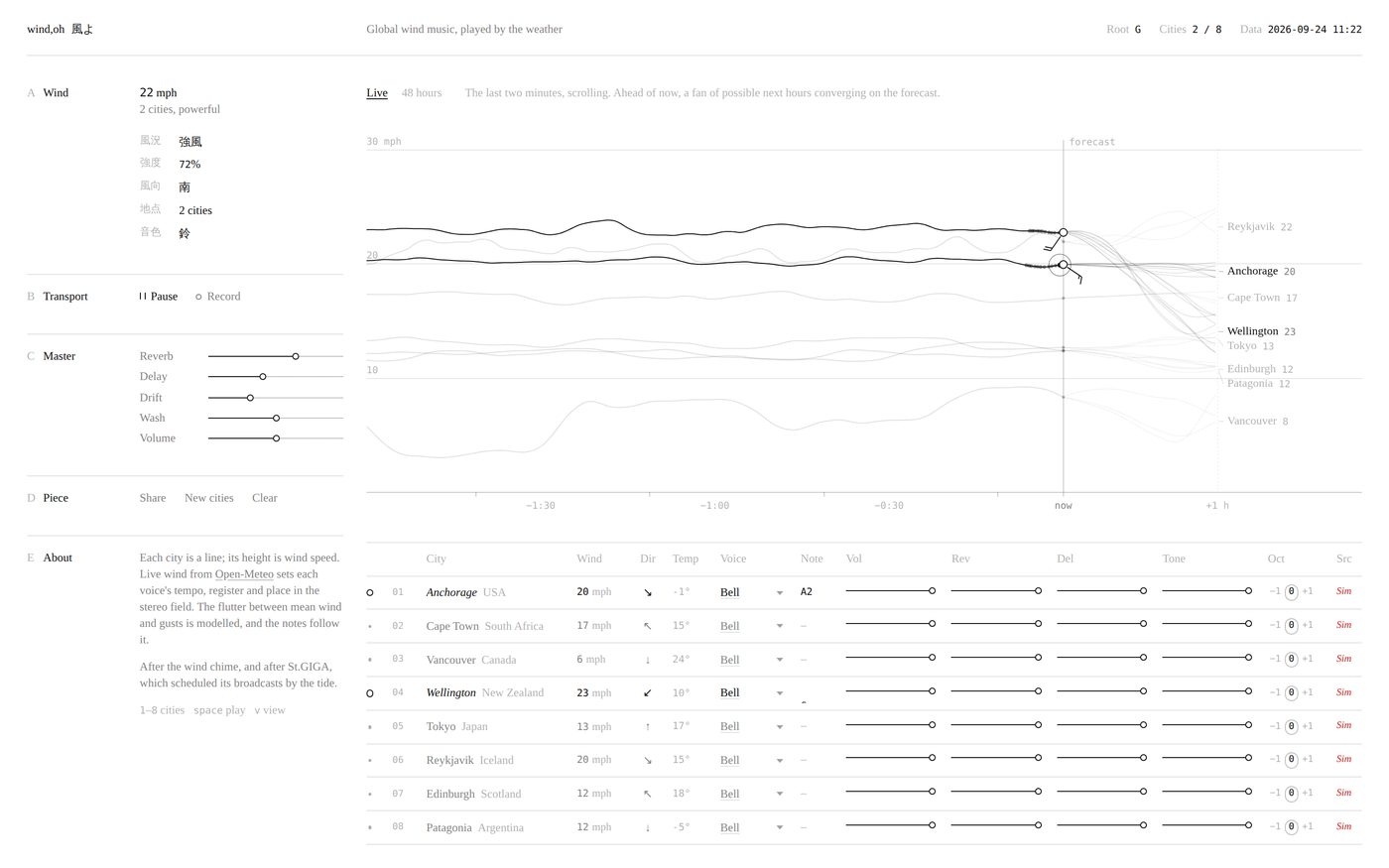
One size of type, more air. -
2.0Lines
From a grid to lines
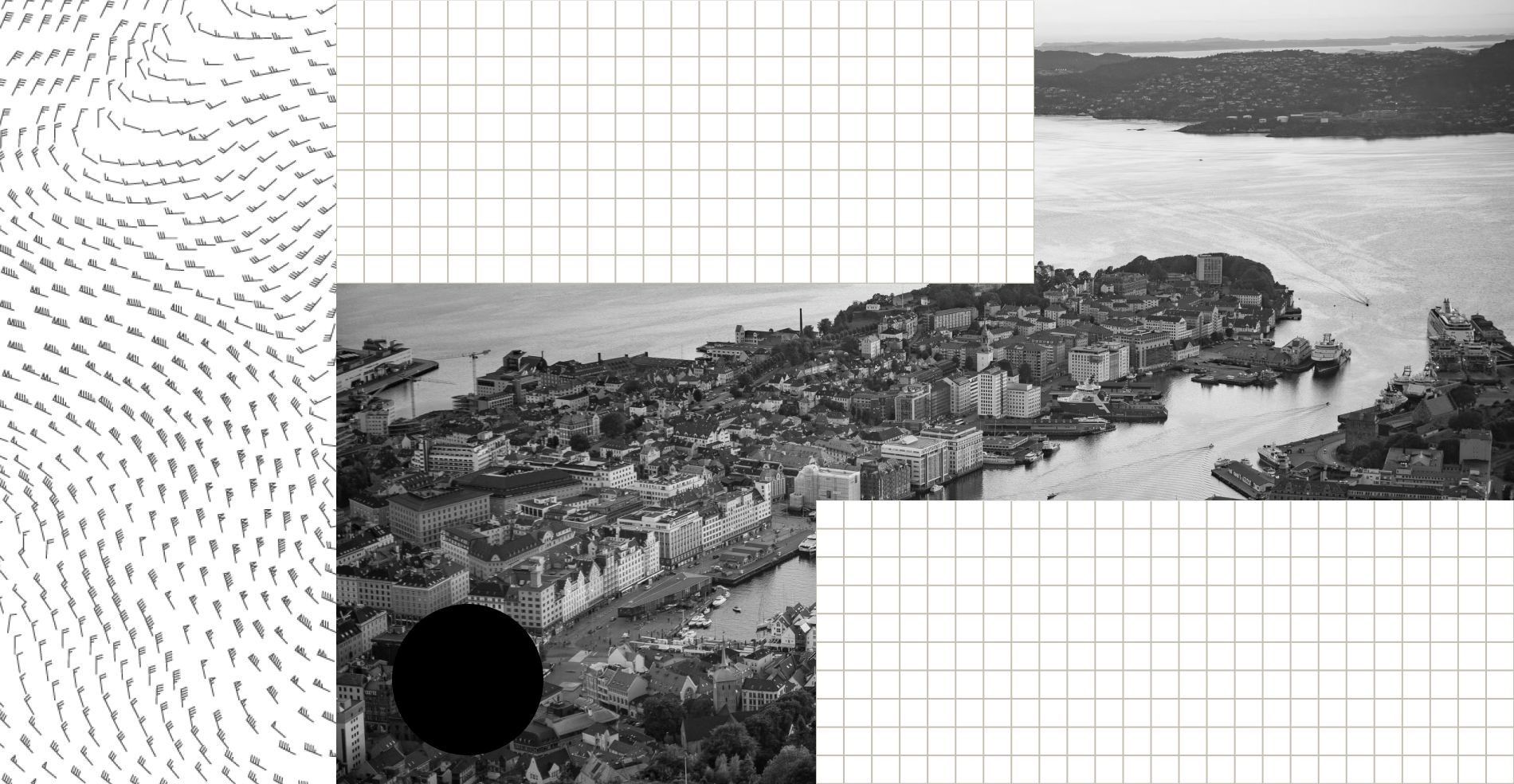
The grid was initially inspired by the incredible work of Il Pleut Studio and was more of a stopping-off point while I kept refining and marinating. I loved the look but it was too much of a rip-off so I wanted to keep evolving it. Lines are closer to wind: a trace scrolling like a chart recorder, a fan of possible futures, a barb pointing into the wind. A serif, one size, lettered sections.
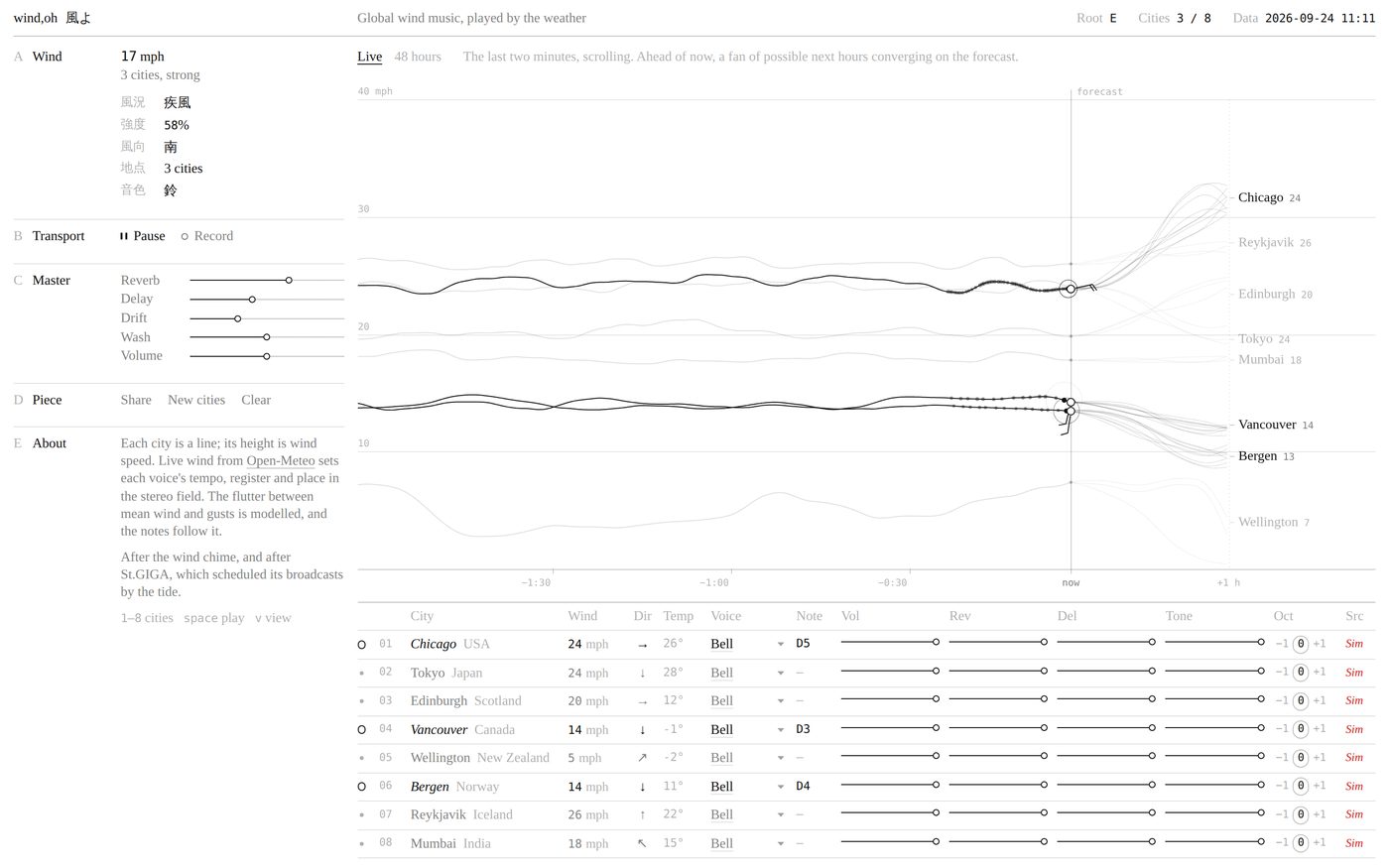
The first lines. - The grid
-
1.4Chart
The grid becomes a chart
Each city got a channel and its mark sat at the height of its wind speed, with the names along the bottom. Sweeps blew through each mark along its real wind direction, and every note played flashed red from its city.
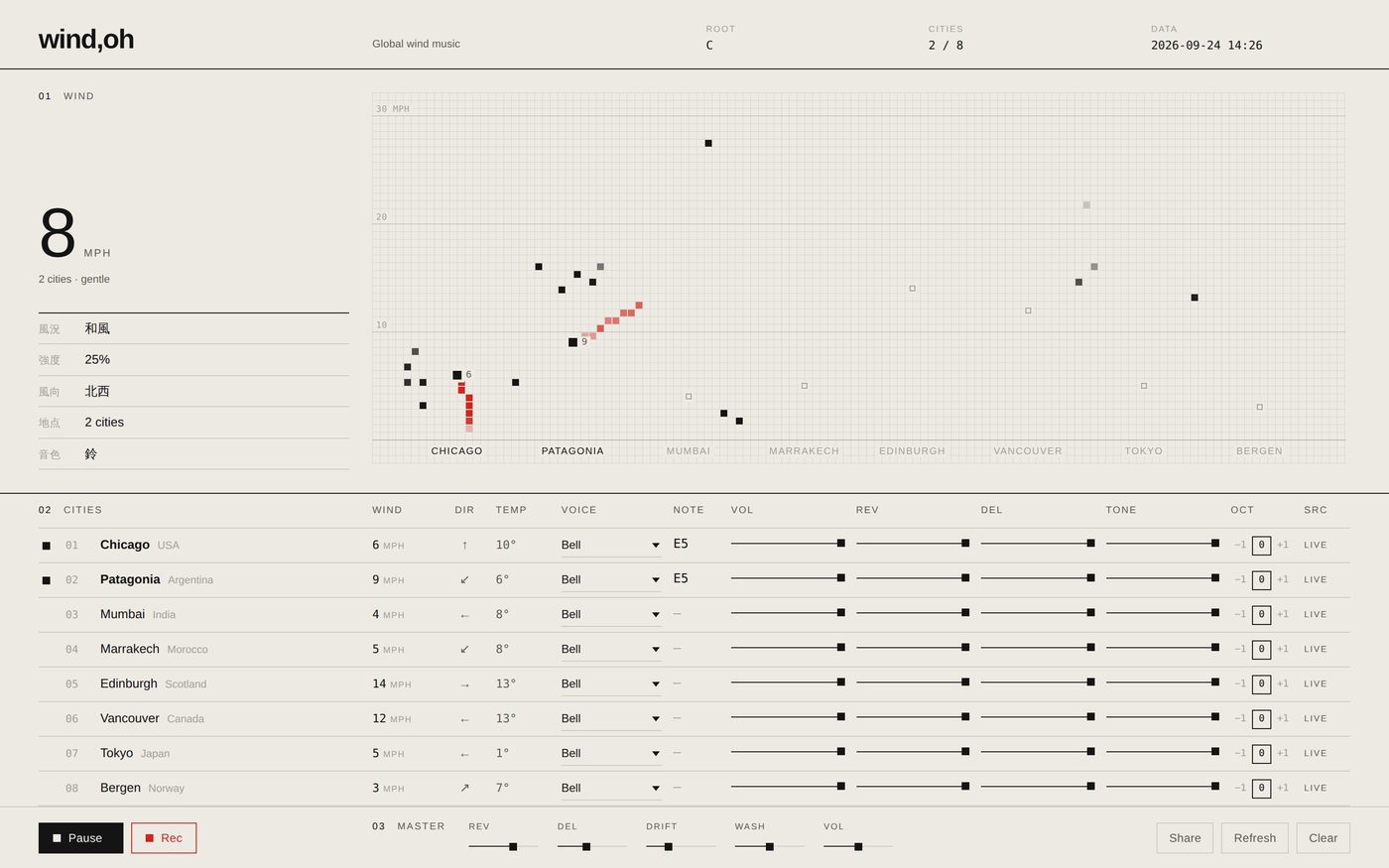
Lanes per city; height is wind speed. -
1.3Swiss
A Swiss typographic system
After Josef Müller-Brockmann: one twelve-column grid for every band of the page, one large figure, hairline rules. Every city got its own channel strip: volume, reverb, delay, tone, octave. A synthesized piano, and a delay that ran away and was tamed.
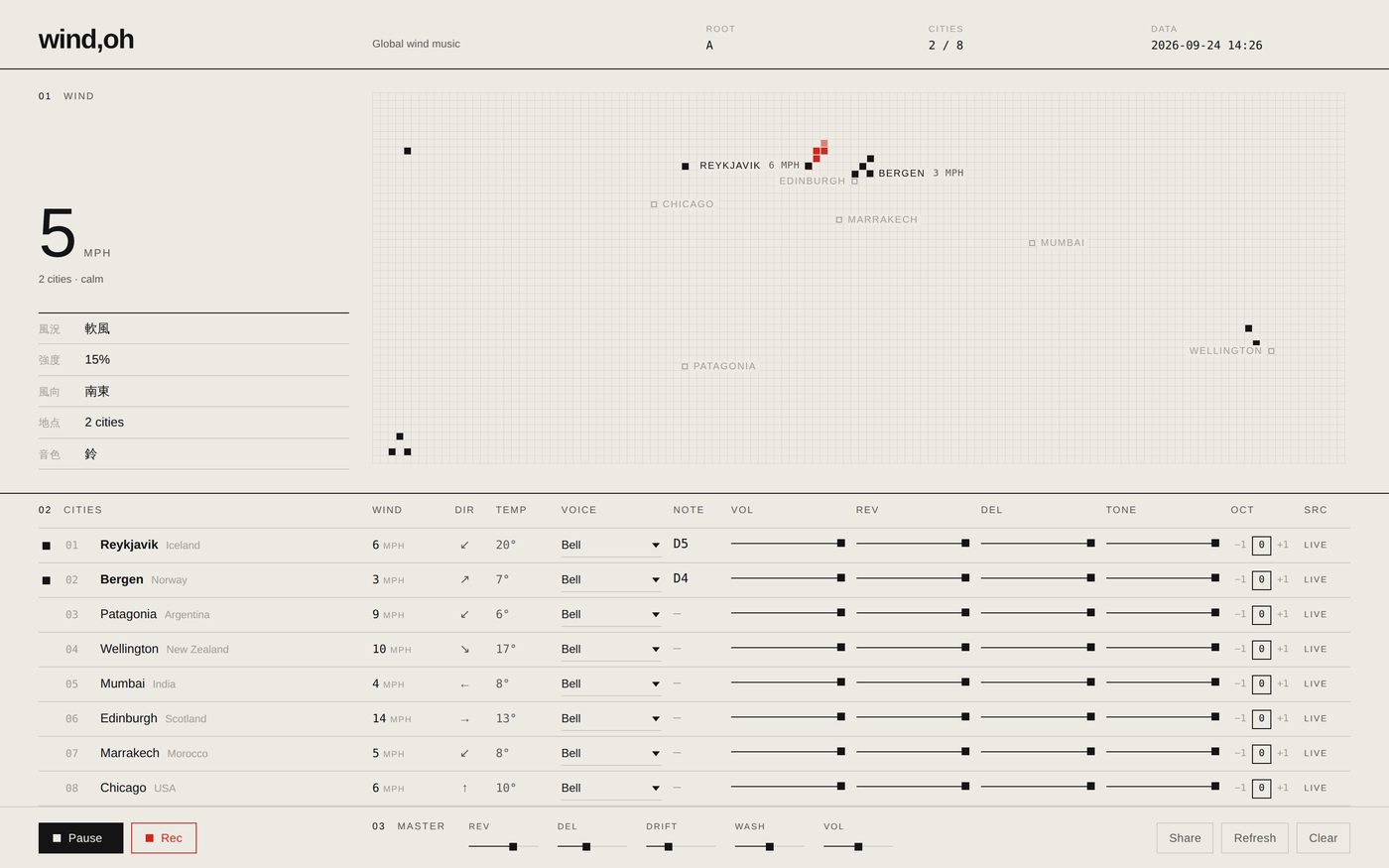
One grid for the whole page. -
1.2Paper
Paper, and a home
The grid moved onto a warm paper color, and the current key moved into the header. This is the version that went live at wind-oh.vercel.app and into version control.
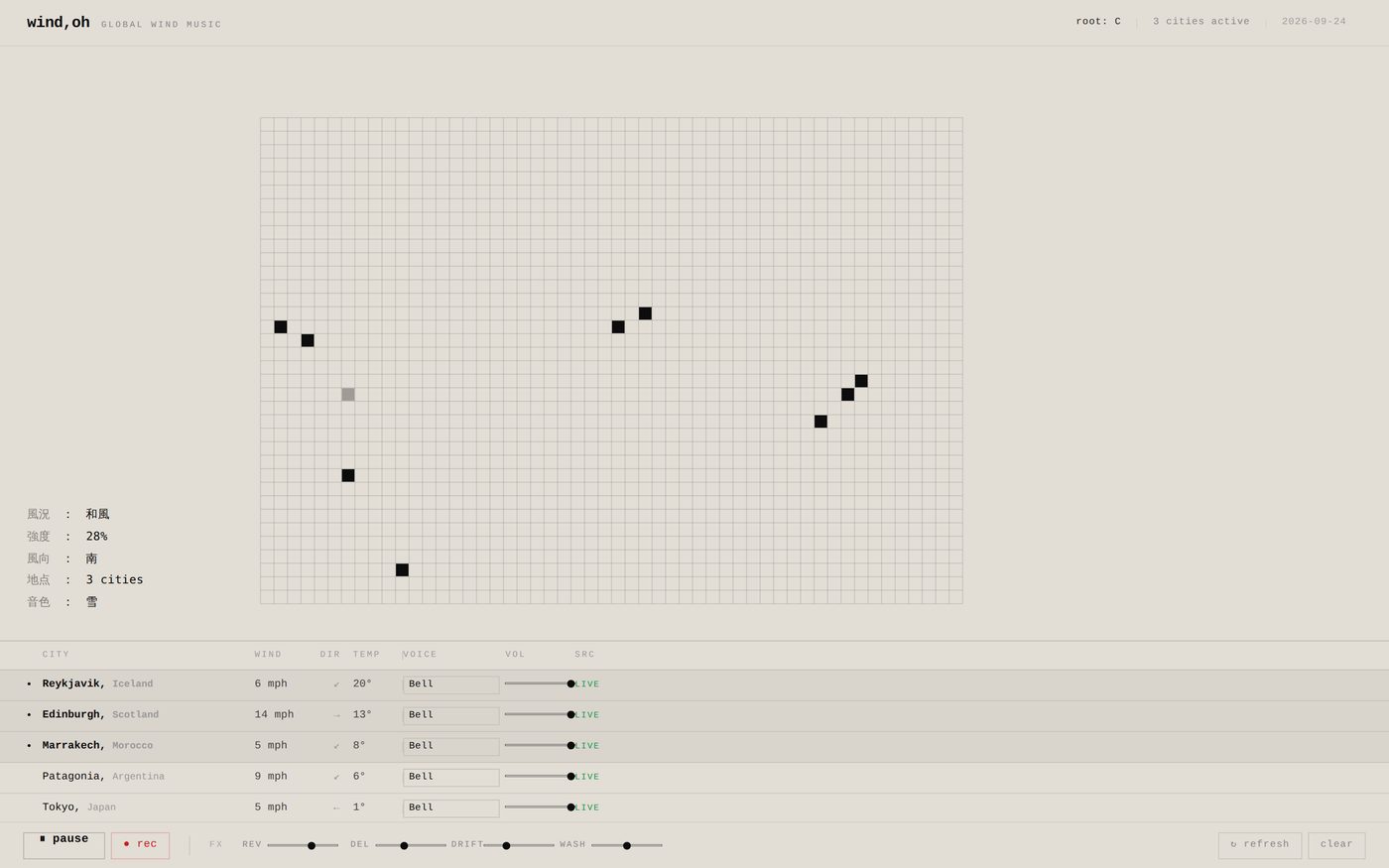
The first version with a public address. -
1.1Grid
The first grid, and the wash
The cards gave way to a fine grid that filled cell by cell as the wind blew through it. A readout in Japanese appeared (風況, 強度, 風向, 地点, 音色), and so did the table of cities.
Underneath everything went a wash of synthesized noise, after St.GIGA, the Japanese satellite radio station that scheduled its broadcasts by the tide.
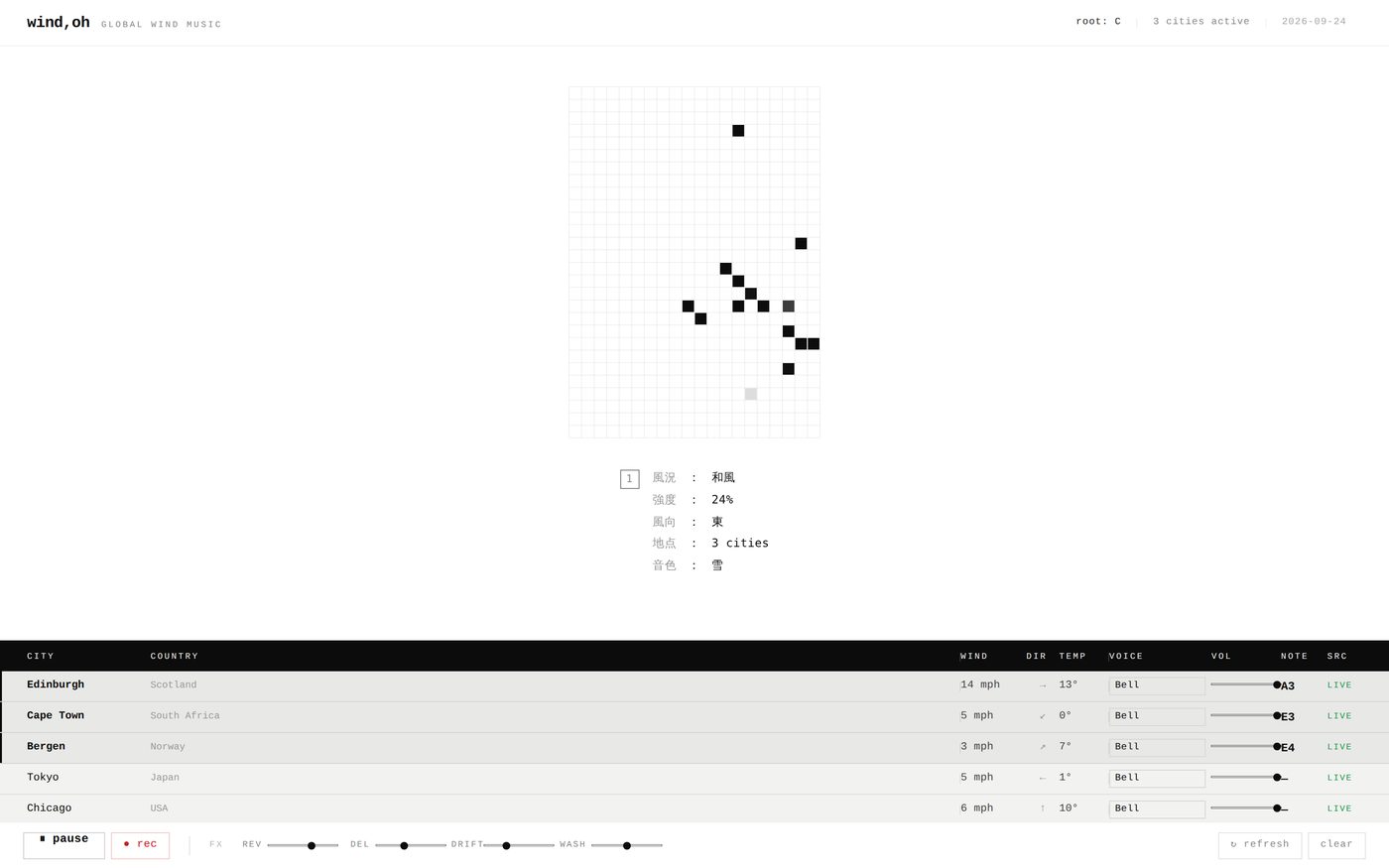
「風よ」 as a grid. - Cards
-
1.0Documented
Translating wind patterns into sound
The version that got written down, with a full technical specification. Wind speed, direction, temperature and humidity set each voice. Direction placed it in the stereo field. Voices were modeled on classic synthesizers, and a waveform showed at the top. It added recording, and a solo mode to hear one city alone.
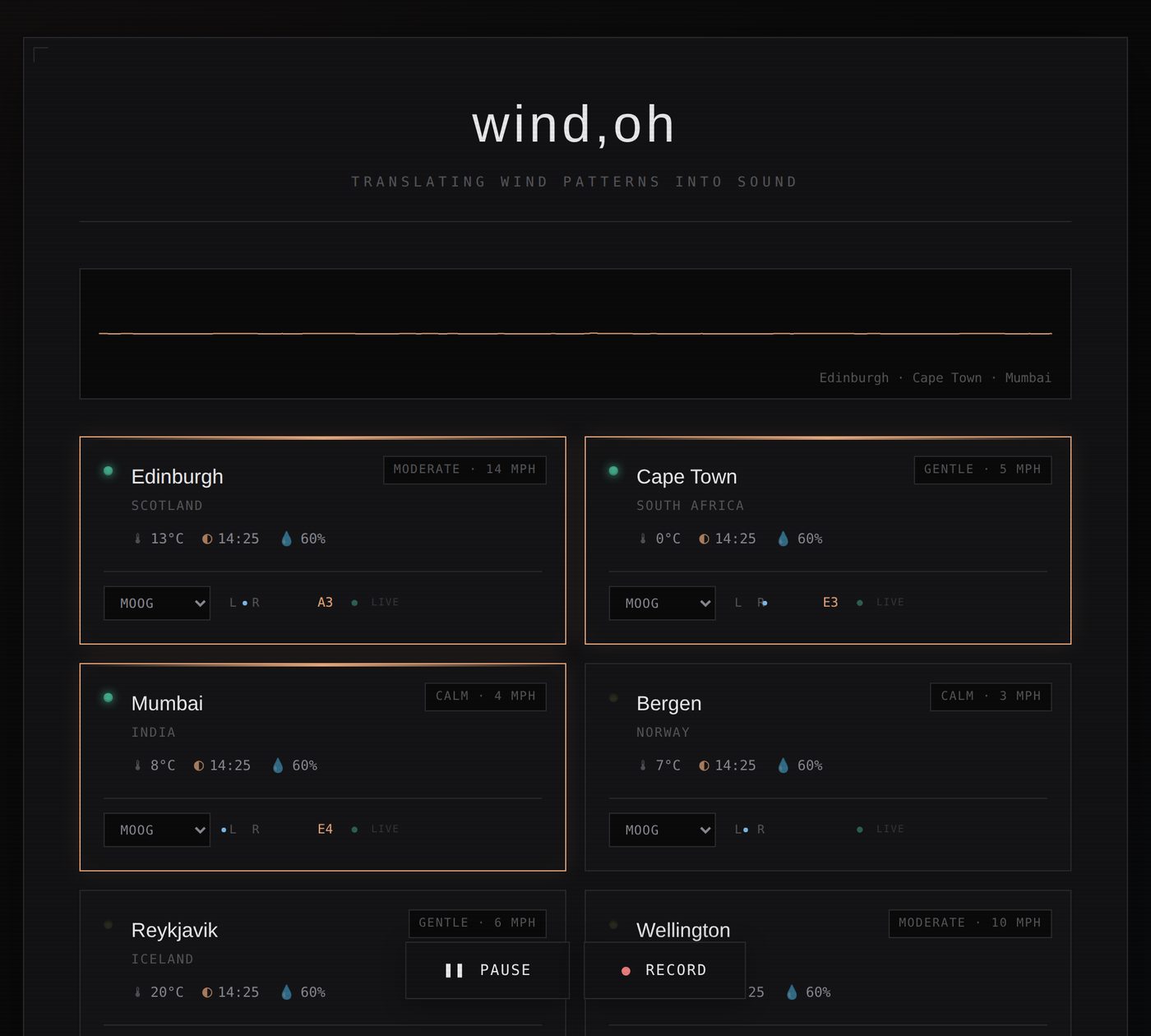
Cards, a waveform, and a record button. -
0.3Light
In daylight
The same instrument on white, to see whether it held up outside the dark.
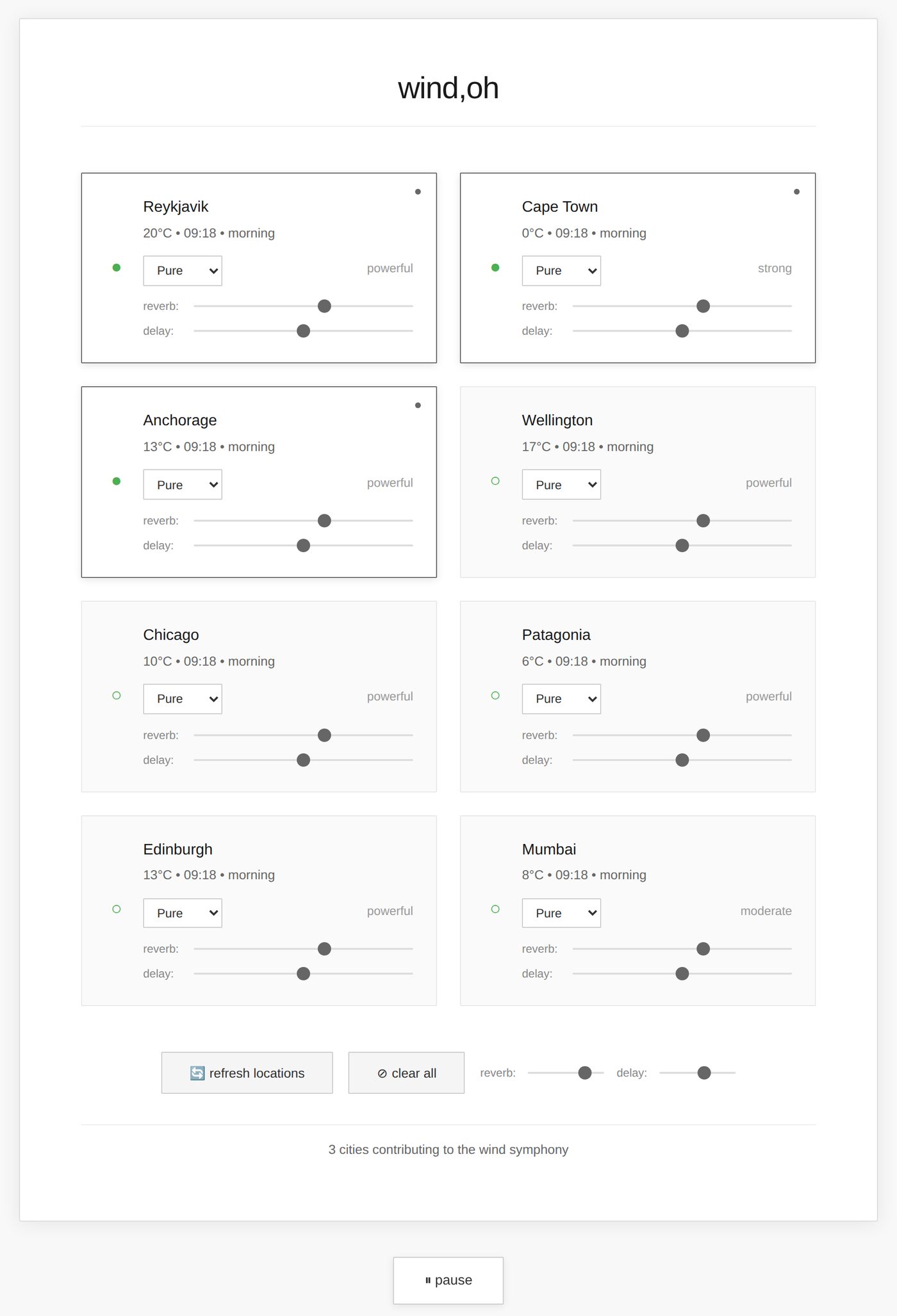
The same cards, in daylight. -
0.2Voices
Every city its own voice
Each city got a voice, its own reverb and delay, and an arrow for its wind, repeated to show how hard it blew. Recorded piano chords joined the synthesis. A playing city lit up green.
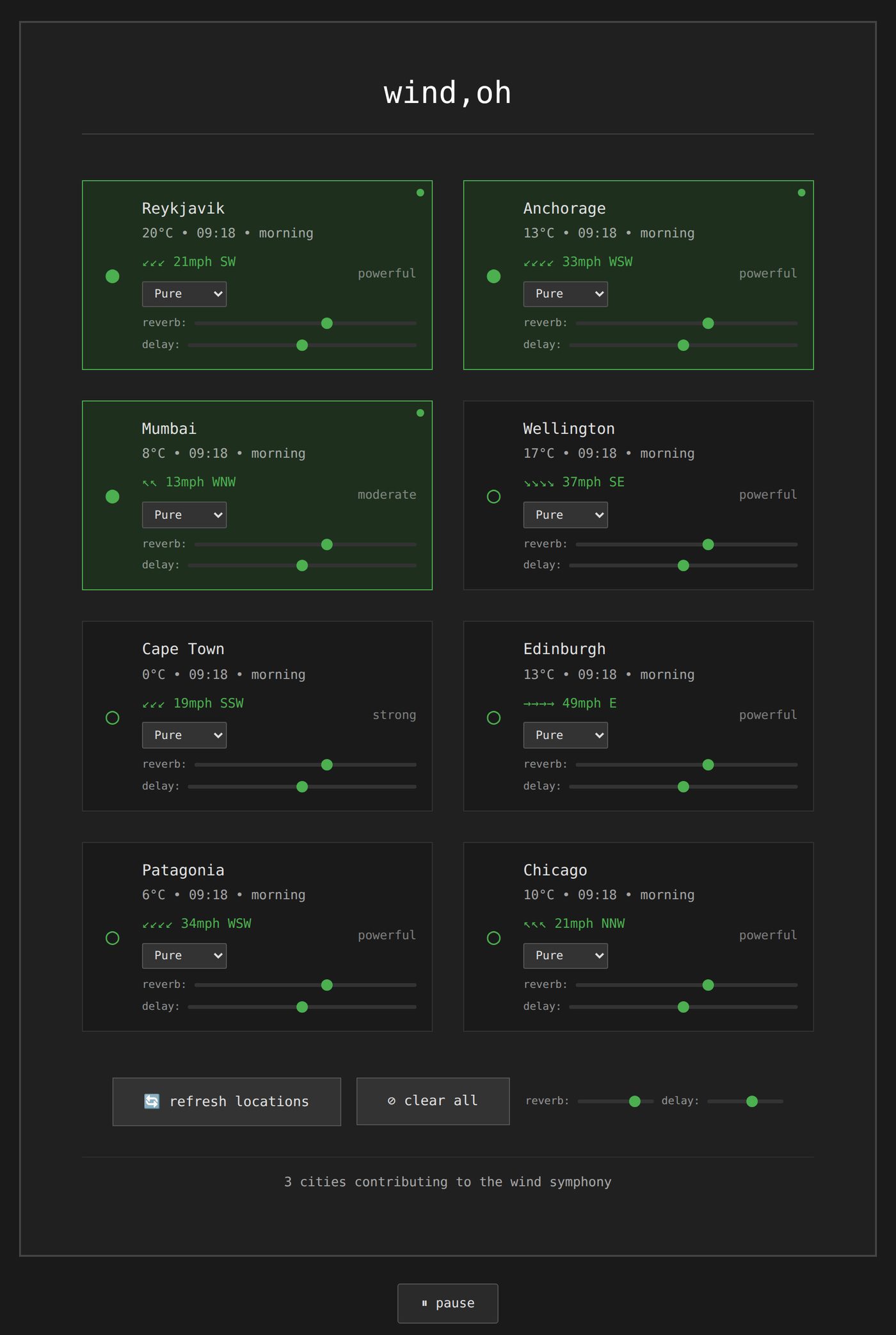
Voices, reverb, delay: per city. -
0.1Sketch
The first sketch
Eight cities, live wind from Open-Meteo, one pentatonic scale so nothing could clash. You switched cities on and pressed “start listening”. The only line of copy: n cities contributing to the wind symphony.
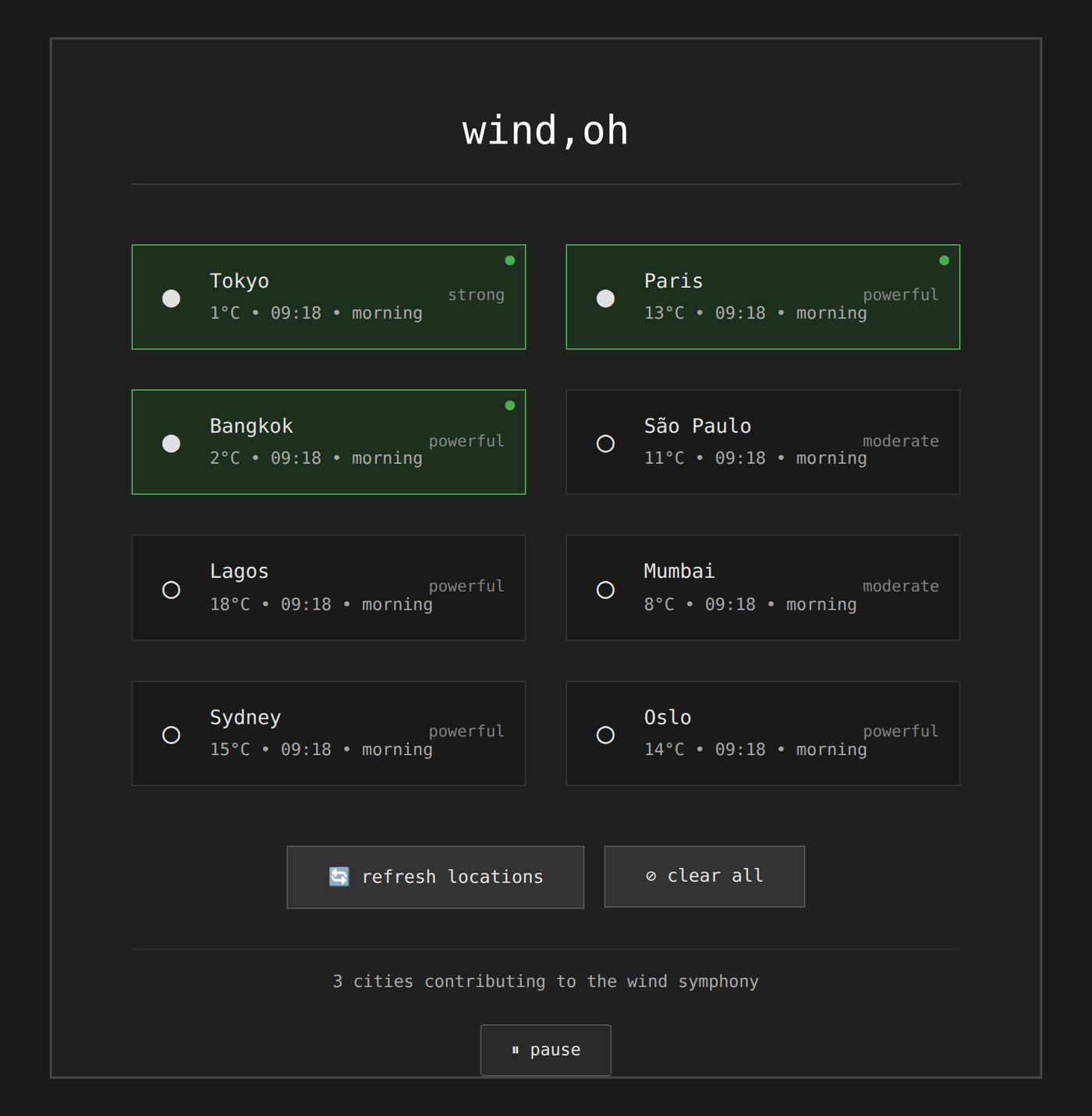
Where it started.
Sources
- Open-Meteo: forecast, ensemble, historical, geocoding and marine data.
- St.GIGA, Wikipedia.
- Il Pleut Studio, whose grids started the grid.
- Josef Müller-Brockmann, Grid Systems in Graphic Design, for version 1.3.
- kugiri, for the type in motion (MIT license).